Challenges of space activities: space debris and orbital collisions
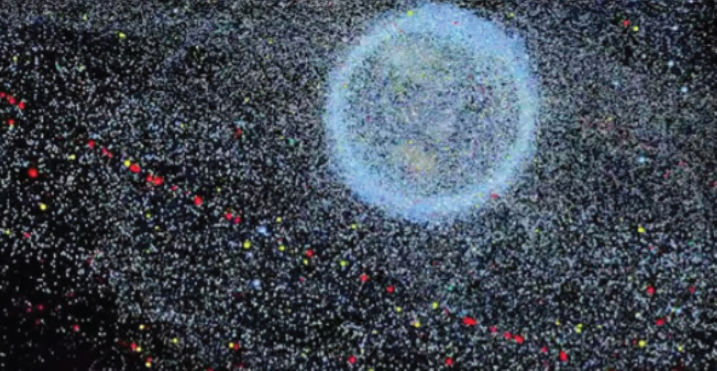
Due to debris collisions, power explosions, anti satellite weapon tests, and the rapid growth of space launches worldwide, there has been a sudden increase in space debris, and the possibility of a large number of abandoned objects colliding in near Earth orbit is also increasing. At least until 2030, this possibility will continue to rise. All countries' civil, commercial, and government satellites have collision risks. The difficulty of ensuring the safety of space operations has increased, making it increasingly difficult to guarantee the overall stability of the space environment.
Debris in orbit. The collision between objects and the explosion of a large number of abandoned weapons will definitely increase the amount of space debris in orbit. In January 2022, more than 25000 objects exceeding 10 centimeters were tracked and recorded in Earth orbit, including those operating normally in orbitspacecraft. The main risk for spacecraft operating in orbit comes from unrecorded untraceable lethal debris (LNT), which measures between 5-10 centimeters in size. It is estimated that there are approximately 600000 to 900000 unrecorded lethal and untraceable hazardous debris in near Earth orbit.
Prior to 2007, the majority of space debris came from the fragments of several stage separation explosions of launch vehicles. Nowadays, about half of the recorded debris comes from three sources: a failed meteorological satellite destroyed by China in 2007; In 2009, a collision accident occurred between a US communication satellite and a malfunctioning Russian satellite; Russia's "Nudol" anti satellite test in 2021.
Threats of Massive Object Collision. Among the recordable objects, there are approximately 1300 large objects in low Earth orbit, and discarded items larger in size and weight than mobile phones can pose a threat to space activities in low Earth orbit. These objects approach at a speed of less than 5 kilometers per day, and some objects pass by within 1 kilometer at a speed of 15 kilometers per second within a month.
A collision between two objects can produce almost 3500-15000 traceable space debris and approximately 55000-225000 untraceable lethal debris. Typically, a typical satellite disintegration produces about 250 trackable pieces of space debris. The annual collision probability of a large-scale abandoned object cluster at 1500 kilometers is 1/5000, and the collision probability of an abandoned object cluster at 850 kilometers is 1/800. A collision between a group of abandoned objects at an altitude of 850 kilometers may double the number of abandoned objects in low Earth orbit (for example, producing 15000 trackable fragments), and the fragments generated by a collision at an altitude of 1500 kilometers may remain in orbit for thousands of years.
Threats Posed by Debris in Space. Space debris may cause damage or even destroy equipment to satellites and manned spacecraft. To avoid this threat, adding additional protective shields to spacecraft to resist collisions with small debris, or using fuel to frequently avoid maneuvers, will increase space costs. Any maneuver will increase the use of fuel, increase the complexity of maneuvering, shorten the life cycle of spacecraft, and require launching more spacecraft to maintain the same altitude in order to achieve the same capability. Between 1998 and 2022, the International Space Station in low Earth orbit maneuvered at least 30 times to avoid collisions with space debris. along withsatelliteWith the increase in constellation size and space debris, the likelihood of satellite collisions is growing, especially for satellites in low Earth orbit.
The orbital lifetime of space debris. The duration of space debris in orbit is mainly determined by its volume and orbital altitude. The smaller the volume of the object in orbit and the higher its orbit, the longer it stays in orbit. The fragments generated by explosions and collisions may be smaller and appear in lower orbits compared to abandoned payloadsrocketArrow body, shorter in orbit time. Atmospheric resistance is like a natural cleaner, causing the vast majority of debris in low orbit to gradually enter the Earth's atmosphere and burn up. Objects at an altitude of 500 kilometers can remain in orbit for up to 10 years. Waste and debris at altitudes close to 1500 kilometers can persist for over 10000 years.
Orbital collisions often occur at higher speeds (such as near Earth orbit exceeding 25000 miles per hour and dispersing debris to more different orbital altitudes). The probability of collision between two objects at an orbital altitude of 975 kilometers per year is 1/120, leaving behind a lot of debris and remaining in orbit for over 1000 years.